What Does the Labiaplasty Recovery Timeline Look Like?
A typical labiaplasty recovery timeline begins with swelling, tenderness and careful wound protection. Many people can manage gentle daily activities relatively soon, but the tissues continue healing well after discomfort improves. The precise pace depends on the operation, medical history and how the wound responds.
For women in Dubai planning time away from work, childcare or exercise, it helps to separate early comfort from full healing. Being able to walk comfortably or return to a desk does not mean that stitches and deeper tissues are ready for friction or strenuous activity.
This week-by-week guide explains common changes, practical aftercare and warning signs. It provides general information rather than a schedule to follow without your surgeon’s approval. Your discharge instructions always take priority over an online recovery timeline.
Before Recovery Begins: What Affects Healing?
Labiaplasty usually reshapes the labia minora, the inner folds of skin around the vaginal opening. The amount of tissue treated, incision pattern, suture placement and any additional procedures can influence swelling, tenderness and the time required before normal activities are comfortable.
Healing can also be affected by smoking, diabetes, medications, previous surgery and infections. A clinician may advise treating an active vulval or vaginal condition before elective surgery. It is worth discussing your work demands, travel plans and support at home before setting a procedure date.
Prepare a Simple Recovery Plan
- Arrange comfortable, loose underwear and clothing that will not rub the surgical area.
- Set aside time for rest, especially during the first few days.
- Keep prescribed medication and wound-care instructions easy to access.
- Plan help with heavy lifting, exercise and strenuous household tasks.
- Know whom to contact if pain, bleeding or swelling suddenly increases.
Do not assume a particular painkiller, antiseptic or cream is safe for your wound. Ask your surgical team what to use, how to clean the area and whether any existing medicines should be continued or adjusted.
Days 1–3: Protect the Area and Manage Swelling
The first 72 hours often bring the most noticeable soreness and swelling. The labia may appear larger, uneven or bruised. This early appearance is not a reliable indication of the final result because surgical inflammation temporarily changes the shape of the tissues.
How Long Is Bed Rest After Labiaplasty?
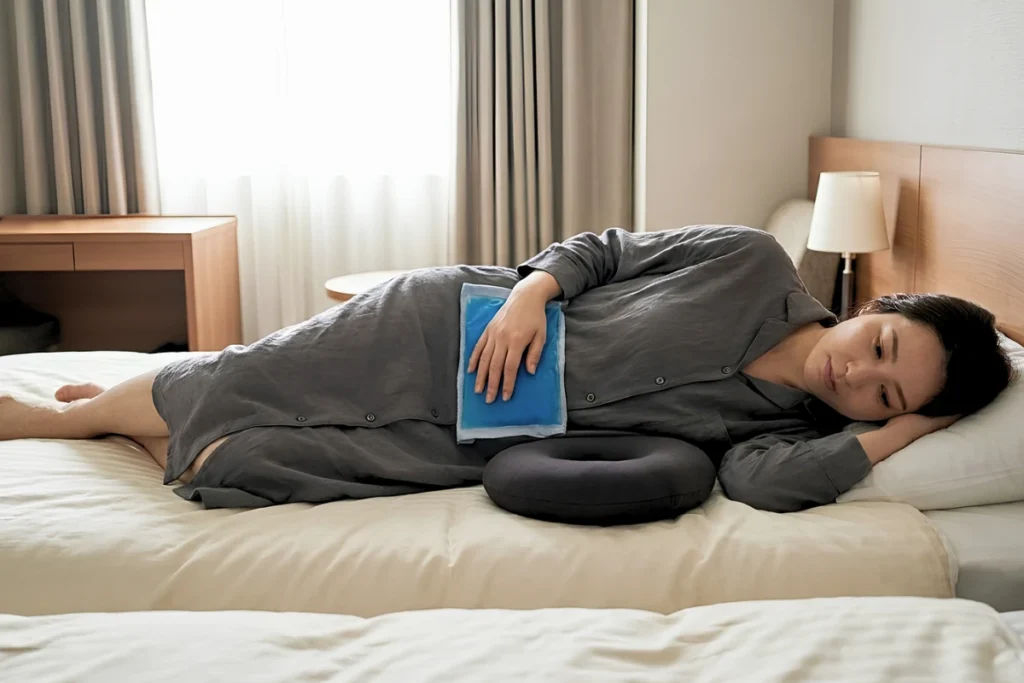
Most patients only need focused rest during the first two to three days after surgery. Rather than staying completely immobile in bed, balance rest with short, gentle walks around your home every few hours to support healthy blood circulation and reduce stiffness. Your surgeon may also recommend a cold pack wrapped in fabric or positioned over underwear for brief intervals. Never place ice directly against the skin, and do not apply pressure or cold for longer than advised.
Passing urine may cause stinging, particularly when urine touches a fresh incision. Gentle rinsing with water, if recommended, and carefully patting dry can make hygiene more comfortable. Avoid vigorous wiping, scented products and unnecessary handling of the wound.
What Is Usually Helpful During the First Three Days?
- Take prescribed or approved pain relief as directed.
- Change pads or dressings according to the written instructions.
- Drink fluids and eat regular meals to support recovery.
- Avoid prolonged sitting if it increases pressure or discomfort.
- Walk gently for short periods rather than staying immobile all day.
A small amount of spotting can occur after surgery. Heavy bleeding, rapidly expanding one-sided swelling, fever or severe pain that does not improve with prescribed medication should prompt urgent contact with your surgical team.
Days 4–7: Discomfort May Begin to Settle
By the end of the first week, many patients feel more comfortable moving around. Bruising may change colour and the surgical area can still look swollen. Absorbable stitches may remain visible, and mild pulling sensations can occur while the tissue is healing.
Some people return to sedentary work after several days, while others need longer. Travel time, sitting arrangements and access to a clean bathroom all matter. If commuting or walking causes rubbing, taking additional recovery time may be sensible.
Do not inspect or measure the labia repeatedly to judge symmetry. Early swelling can be different on each side, particularly if one side needed more reshaping. Your follow-up assessment is a more useful opportunity to raise concerns about the wound.
Week 2: Gradual Return to Gentle Routine
During the second week, swelling and bruising usually improve, although tenderness can persist. Most patients are not yet ready for cycling, running, gym workouts or intercourse. Wearing loose fabrics and keeping the area clean remain important even if pain is minimal.
The NHS labiaplasty guidance explains that soreness, bruising and swelling can last up to two weeks, while complete skin healing takes longer. This is a helpful distinction: early improvement should not be interpreted as permission to stop postoperative precautions.
If you notice itching, do not automatically assume an infection. Mild itching can accompany healing or dissolving sutures, but worsening itch with discharge, strong odour, redness or increasing pain deserves an examination rather than self-treatment.
Weeks 3–4: Healing Continues Beneath the Surface
At three to four weeks, the incisions may look much calmer, yet the tissue remains vulnerable to friction and stretching. You might be comfortable with normal walking and desk duties while still needing to avoid strenuous workouts and activities that put pressure on the vulva.
Some sutures dissolve gradually rather than disappearing on a predictable day. Do not pull loose threads or attempt to remove stitches at home. If a stitch catches on clothing or causes persistent irritation, ask the surgical team to assess it.
When planning a return to physical activity, consider both the movement and the clothing involved. A gentle activity without chafing may be acceptable earlier than cycling, high-impact exercise or resistance training that produces pressure through the pelvic area.
Weeks 4–6: Review Before Exercise and Intimacy
Many postoperative plans restrict strenuous exercise and penetrative intercourse for approximately four to six weeks, sometimes longer. The exact timing depends on wound closure, symptoms, your surgeon’s instructions and whether any healing difficulty occurred.
You should not use the calendar alone to decide when sexual activity is safe. The area should be healed, comfortable and reviewed when recommended. Returning too early may cause pain, bleeding or disruption of an incision.
The Cleveland Clinic labiaplasty recovery guide similarly advises avoiding strenuous exercise and sexual intimacy during the early healing period and explains that remaining swelling may settle over several months.
Questions to Ask at Your Follow-Up
- Has the incision healed enough for ordinary exercise?
- When is cycling or swimming appropriate for my recovery?
- Is it safe to resume intercourse or tampon use?
- Is any remaining swelling, lumpiness or tenderness expected?
- What should I do if an activity causes bleeding or new pain?
Months 2–6: Swelling and Scars Continue to Mature
Even after normal activities resume, small changes in softness, shape, colour and scar texture may continue. The labial edges may feel firmer before gradually softening. Differences between the two sides may become less visible as residual swelling decreases.
Final results cannot be judged reliably from photographs taken during the first few weeks. Cleveland Clinic notes that swelling may take four to six months to settle completely. Some people heal faster, and others require longer follow-up.
If the result appears different from what you expected, discuss your concerns at a planned review rather than assuming that revision surgery is immediately needed. A surgeon should first check whether the tissues have completed healing and identify any functional problem.
Everyday Labiaplasty Aftercare: What Matters Most?
Good aftercare aims to protect the incision, reduce unnecessary irritation and make it easier to recognise complications. It does not require complicated products. In fact, applying several unapproved creams can cause irritation and make the wound harder to assess.
Hygiene and Toilet Care
- Follow the advised rinsing or washing method; avoid scrubbing.
- Pat dry gently with clean material rather than rubbing.
- Avoid scented washes, douches and unapproved antiseptics.
- Change any pad or dressing when advised.
- Report burning that becomes severe or prevents urination.
When Can I Shower After Labiaplasty?
Most patients can take a gentle lukewarm shower 24 to 48 hours after surgery, unless advised otherwise by their surgeon. Avoid hot water, soaking in baths, and directing high-pressure water straight onto the surgical area.
Clothing and Activity
- Choose breathable clothing that does not pull against the labia.
- Reduce prolonged friction from tight leggings or fitted underwear.
- Avoid cycling, horse riding and intense lower-body training until cleared.
- Do not resume sexual activity solely because swelling has reduced.
- Ask before using tampons, swimming pools or hot tubs.
Constipation can increase discomfort from straining. Fluids, regular meals and advice about bowel care can help. If you are prescribed medication, take it according to the instructions rather than changing the dose when symptoms fluctuate.
Which Symptoms Are Expected, and Which Are Not?
Mild to moderate swelling, bruising, tenderness, temporary changes in sensitivity and a little spotting can occur in uncomplicated recovery. It is also common to experience temporary anxiety, frustration or mild mood shifts while waiting for swelling to settle. These physical and emotional changes should generally trend towards improvement, even though individual days may feel different.
Contact your surgeon promptly for any concerning change. Seek urgent assessment for heavy bleeding, severe or rapidly worsening pain, a rapidly expanding lump, fever with increasing redness, inability to pass urine, or signs of wound separation.
Warning Signs That Should Not Be Ignored
- Bleeding that soaks dressings or does not settle.
- Swelling that suddenly enlarges, especially on one side.
- Yellow-green discharge, increasing redness or unpleasant odour.
- Fever or feeling increasingly unwell.
- Pain that is intensifying instead of easing.
- An incision that opens or exposes underlying tissue.
If you experience chest pain, breathlessness or a painful swollen leg after any operation, seek emergency medical care. These symptoms are not typical labiaplasty recovery signs and require urgent evaluation.
How Does Your Recovery Plan Change if You Work or Travel?
A desk job and a physically demanding job create different recovery challenges. Some women can work remotely sooner because they can change position, rest between tasks and avoid commuting. Jobs involving prolonged standing, lifting or protective uniforms may require longer leave.
Air travel soon after surgery should be discussed in advance. Long journeys can make hygiene, sitting comfort and access to medical review more difficult. Do not schedule an important trip based on an assumed return-to-work date without considering possible complications.
For patients living in Dubai, Dr. Mahsa Aghaei can discuss recovery expectations during a clinical consultation and help clarify which activities may require temporary restrictions. The specific advice should follow the planned operation and examination findings.