If you are considering vaginal tightening, two questions probably matter more than anything else: Is it safe? And does it actually work?
The answer depends on what is meant by “vaginal tightening.”
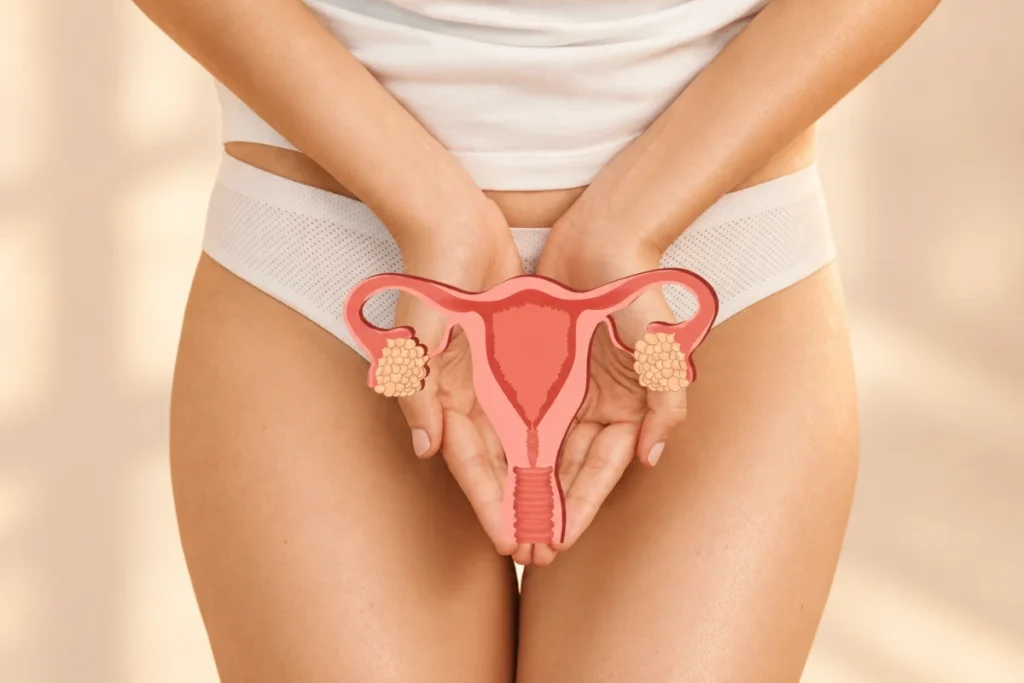
There is no single vaginal tightening procedure. The term may refer to pelvic-floor rehabilitation, surgical procedures such as vaginoplasty or perineoplasty, or energy-based treatments using laser or radiofrequency. Each works differently, has different risks and is supported by a different level of medical evidence.
This distinction is important because treatments advertised under the same “vaginal tightening” label should not be assumed to offer the same results.
Vaginal tightening can be safe and helpful in selected women when the underlying problem is properly identified and the treatment is appropriate for it. Pelvic-floor rehabilitation can help when muscle weakness contributes to symptoms, while surgery may address particular structural problems. Evidence for laser and radiofrequency treatments is less certain, with professional organisations continuing to highlight limitations in long-term safety and effectiveness data.
What Is Vaginal Tightening?
“Vaginal tightening” is a broad term rather than one specific medical procedure.
Women may use it to describe treatment for:
- a feeling of vaginal looseness after childbirth
- reduced pelvic-floor strength
- changes around the vaginal opening
- changes in sexual sensation
- perineal stretching after delivery
- pelvic-floor symptoms
- cosmetic concerns about vaginal anatomy
The term vaginal rejuvenation is also commonly used in advertising, but ACOG describes it as a marketing term rather than a defined medical diagnosis or treatment. It may refer to vaginoplasty, perineoplasty, laser treatment, radiofrequency treatment or combinations of procedures.
That matters because a woman who has pelvic-floor weakness does not necessarily need the same treatment as a woman with a significant perineal injury after childbirth.
Likewise, a woman experiencing vaginal dryness or discomfort around menopause may have an entirely different condition. The safety and effectiveness of any treatment therefore depend on whether it is treating the actual cause of the symptoms.
Read our guide to How Vaginal Tightening Works to learn about the different methods and their potential benefits and limitations.
Is Vaginal Tightening Safe and Effective?
There is no single yes-or-no answer.
1. Pelvic-floor rehabilitation
Pelvic-floor exercises and physiotherapy are non-surgical approaches used when pelvic-floor weakness or poor muscle coordination contributes to symptoms.
These treatments do not physically make the vaginal canal smaller. Instead, they aim to improve the strength, endurance and coordination of the muscles supporting the vagina and pelvic organs.
When muscle weakness is the underlying problem, improving pelvic-floor function may help symptoms without surgery or an energy-based procedure.
2. Surgical vaginal tightening
Procedures such as vaginoplasty and perineoplasty physically alter or repair vaginal or perineal tissues.
Because surgery changes anatomy directly, it can produce a structural change in appropriately selected patients.
However, cosmetic genital surgery should not be presented as automatically safe or proven to improve sexual function.
ACOG states that female genital cosmetic surgical procedures performed solely to alter sexual appearance or function are not supported by high-quality evidence demonstrating safety and effectiveness. Possible complications include bleeding, infection, scarring, changes in sensation, pain during sex and the need for further surgery.
This is different from medically indicated pelvic-floor or reconstructive surgery performed to treat a diagnosed structural problem.
3. Laser vaginal tightening
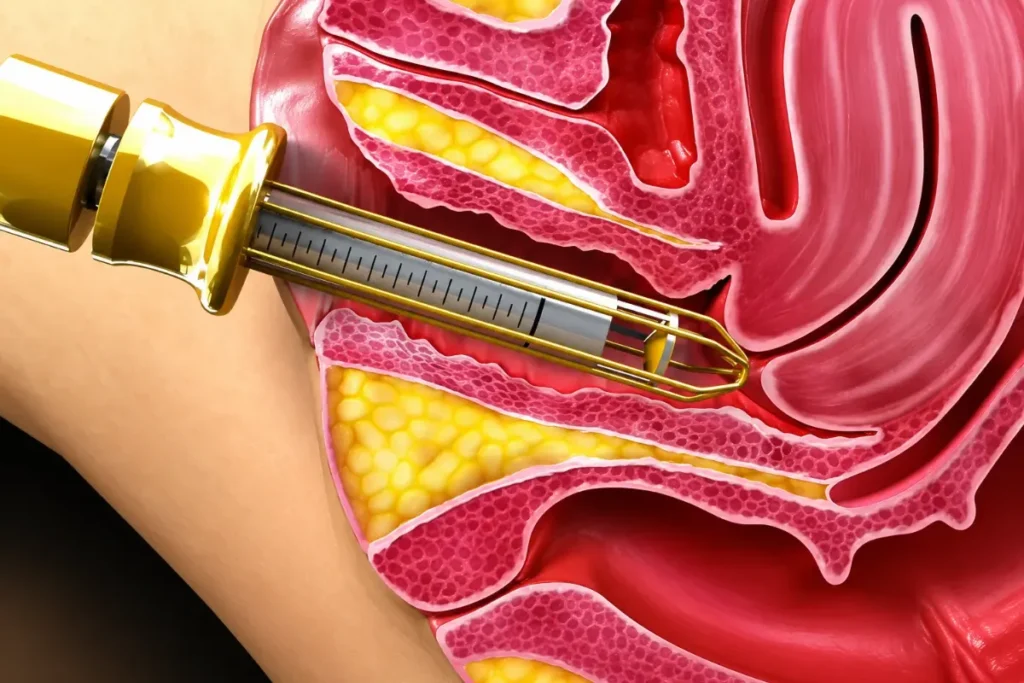
Laser treatments deliver controlled energy to vaginal tissues with the proposed aim of stimulating collagen remodelling and changing tissue characteristics.
Some studies have reported improvements in symptoms described as vaginal laxity or sexual function.
But there is an important limitation.
A 2024 systematic review found improvements in observational studies of laser and radiofrequency treatments, but those improvements were not consistently reproduced in randomised controlled trials. The researchers also found significant variation between studies and important risks of bias.
A newer 2026 systematic review involving 34 studies similarly concluded that energy-based treatments may show benefit, but much of the available evidence still comes from observational studies with substantial bias. Larger, better-designed randomised trials are needed before firm conclusions can be made.
4. Radiofrequency vaginal tightening
Radiofrequency treatment also uses controlled heating, but it produces that heat through radiofrequency energy rather than laser energy.
As with laser therapy, some studies report improvements.
However, professional guidance continues to note unanswered questions around:
- which patients are most likely to benefit
- the ideal treatment protocol
- how many sessions are necessary
- whether maintenance treatment is needed
- how long benefits last
- long-term safety
The American Urogynecologic Society has specifically noted that longer-term consequences of vaginal energy-based treatments remain uncertain. So the evidence should be described as evolving, not established.
What Factors Affect Vaginal Tightening Results?
One reason vaginal tightening results vary so much is that women seeking treatment do not all have the same underlying problem.
1. The cause of the symptoms
A woman with weakened pelvic-floor muscles after childbirth may respond differently from someone with a significant perineal injury. Similarly, treatment intended to change vaginal tissue will not necessarily correct pelvic-organ prolapse. The diagnosis matters more than the treatment label.
2. The type of treatment
Pelvic-floor physiotherapy, surgery, laser and radiofrequency do not produce the same kind of result.
Their goals are different:
| Treatment | What It Primarily Targets |
| Pelvic-floor therapy | Muscle strength and coordination |
| Perineoplasty | Perineal tissue and vaginal opening |
| Vaginoplasty | Vaginal anatomy |
| Laser | Proposed tissue and collagen remodelling |
| Radiofrequency | Proposed thermal tissue remodelling |
This is why comparing “vaginal tightening results” without specifying the procedure can be misleading.
3. Childbirth history
Pregnancy and vaginal delivery can affect:
- pelvic-floor muscles
- connective tissue
- the perineum
- vaginal walls
- pelvic support
Women who have experienced significant tears, assisted delivery or multiple vaginal births may have different anatomical changes from women whose symptoms mainly reflect pelvic-floor weakness.
4. Future pregnancy plans
If you are planning another pregnancy, this should be discussed before considering surgery.
Pregnancy and another vaginal birth can place significant pressure on repaired pelvic-floor and perineal tissues and may alter the result of a previous procedure.
5. Expectations
No procedure can guarantee:
- a specific vaginal diameter
- improved orgasm
- improved relationship satisfaction
- permanently improved sexual sensation
Sexual function is influenced by much more than vaginal anatomy. Hormones, pelvic-floor function, pain, emotional wellbeing, relationship factors, medications and menopause can all contribute.
A responsible consultation should therefore establish what result you are actually hoping to achieve before discussing a procedure.
How Are Vaginal Laxity and Related Symptoms Assessed?
There is no universally accepted medical test that determines whether a vagina is “too loose.” In fact, the AUGS has noted that vaginal laxity itself lacks a standard anatomical definition. That is why assessment starts with symptoms rather than a device or treatment package.
Your doctor will ask what has changed
You may be asked:
- Did the symptoms begin after childbirth?
- How long ago did you give birth?
- Does the vaginal opening feel different?
- Have you noticed urinary leakage?
- Do you feel vaginal heaviness or pressure?
- Is there a bulge from the vagina?
- Has sexual sensation changed?
- Is sex painful?
- Do you have vaginal dryness?
- Did you experience a significant tear or episiotomy?
- Are your symptoms affecting your quality of life?
These questions may reveal that what initially sounded like “vaginal laxity” could actually involve pelvic-floor weakness, prolapse, perineal injury, hormonal changes or another condition.
A pelvic examination may be recommended
Your gynecologist may assess:
- pelvic-floor muscle function
- vaginal walls
- vaginal opening
- perineal tissue
- previous birth scars
- pelvic-organ support
- signs of vaginal dryness or tissue changes
Further assessment by a pelvic-floor physiotherapist or urogynecologist may occasionally be appropriate.
The principle is straightforward:
Treat the condition that is present rather than treating the word “looseness.”
What Are the Benefits, Risks and Side Effects of Vaginal Tightening?
The potential benefits and risks depend heavily on the treatment being considered.
Potential benefits of pelvic-floor rehabilitation
When pelvic-floor weakness contributes to symptoms, rehabilitation may improve:
- muscle strength
- muscle coordination
- bladder control
- pelvic support
- aspects of sexual function
It is non-surgical and avoids the risks associated with incisions or energy-based devices. However, it requires correct technique and consistency, and it cannot repair every structural problem.
Potential benefits of surgery
When there is a clearly identified structural issue, surgery may provide a more direct anatomical correction. For example, selected women with significant perineal disruption following childbirth may be considered for reconstructive treatment. But surgery should not be confused with a risk-free cosmetic shortcut.
Possible complications include:
- bleeding
- infection
- scarring
- pain
- painful intercourse
- altered sensation
- dissatisfaction with the result
- need for revision surgery
ACOG advises that patients considering elective genital cosmetic surgery should be informed about the limited evidence supporting effectiveness as well as these potential complications.
Possible side effects of laser and radiofrequency treatments
Energy-based vaginal procedures are often described as “non-surgical,” but that does not mean they have no risks.
ACOG notes that the FDA has warned about complications reported with vaginal energy-based treatments, including:
- burns
- scarring
- pain during intercourse
- persistent pain
The FDA has not approved laser or other energy-based devices specifically for vaginal cosmetic surgery or “vaginal rejuvenation.”
Short-term clinical studies often report only mild temporary effects, but limited long-term evidence means absence of frequent complications in small studies should not be interpreted as proof of long-term safety.
How Effective Is Vaginal Tightening?
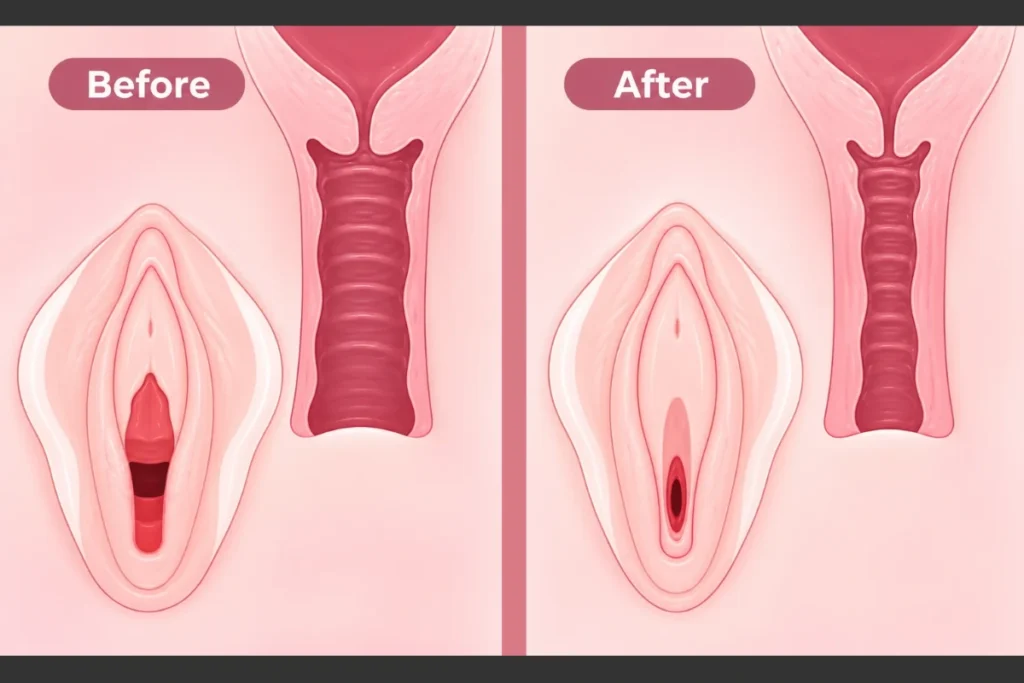
Effectiveness depends on what outcome you are measuring.
Is the aim to improve:
- pelvic-floor strength?
- a subjective feeling of vaginal looseness?
- vaginal anatomy?
- sexual satisfaction?
- urinary symptoms?
- appearance?
These are not interchangeable outcomes.
Pelvic-floor treatments
When pelvic-floor weakness is the problem, strengthening and rehabilitation can have a clear therapeutic role.
But improving muscle function is different from physically reducing vaginal size.
Surgery
Surgical procedures can change anatomy, but evidence that elective cosmetic tightening reliably improves sexual function remains limited.
This distinction matters because anatomical change does not automatically produce improved sexual satisfaction.
Laser and radiofrequency
This is where marketing claims require the most caution.
Some observational studies report better vaginal-laxity scores and sexual-function measures following treatment.
However, observational studies compare patients before and after treatment without necessarily using a placebo or sham procedure. That makes it difficult to know how much improvement comes from the treatment itself.
A 2024 meta-analysis found improvements in sexual-function measures in observational studies but did not find the same improvement when only randomised controlled trials were examined.
The 2026 evidence review reached a similar broader conclusion: energy-based devices may provide benefit, but the evidence base remains dominated by studies with important methodological limitations.
So at present, saying:
“Some patients report improvement”
is supported more strongly than saying:
“Laser vaginal tightening is proven to work.”
That difference matters when making an informed decision.
When Should You See a Gynecologist?
Consider discussing your symptoms with a gynecologist if you notice:
- persistent vaginal looseness after childbirth
- a feeling of pelvic pressure or heaviness
- urinary leakage
- a vaginal bulge
- changes in sexual sensation that concern you
- pain during intercourse
- persistent discomfort around a previous tear or episiotomy
- vaginal dryness or irritation
- symptoms affecting your confidence or quality of life
It is particularly useful to have an assessment before booking a tightening treatment based only on advertising or social-media claims.
For example, pelvic-organ prolapse should not be treated as simple vaginal laxity, and vaginal dryness related to menopause requires a different approach from childbirth-related perineal changes.
The correct diagnosis can sometimes mean that the procedure you originally thought you needed is not the most appropriate option.
What to Expect Before and After Vaginal Tightening Treatment
What happens before, during and after treatment depends on which method is being considered.
Before treatment
A consultation should begin with your symptoms and goals.
Your doctor should explain:
- what appears to be causing the symptoms
- whether treatment is medically necessary
- which options are available
- whether a non-surgical alternative exists
- what improvement is realistically expected
- what evidence supports the recommended treatment
- what the risks and side effects are
- whether future pregnancy could affect the result
If you are considering laser or radiofrequency treatment, ask specifically about the quality of evidence supporting the device and indication being proposed.
Recovery after pelvic-floor therapy
There is no surgical wound or procedural recovery.
Improvement, when it occurs, usually develops gradually as muscle strength and coordination improve.
Recovery after energy-based treatment
Specific protocols vary by device.
Short-term studies commonly describe relatively limited downtime, and some women report temporary discomfort, discharge or irritation.
But a short recovery period should not be confused with proof that a treatment is safer or more effective.
Recovery after surgery
Recovery after vaginoplasty or perineoplasty is more substantial because tissue has been surgically repaired.
There may be:
- swelling
- soreness
- temporary restrictions on exercise
- restrictions on sexual intercourse
- wound-care instructions
- follow-up appointments
The exact recovery depends on what procedure was performed and how extensive the repair was.
When should you seek medical attention after a procedure?
Contact your treating doctor if you experience symptoms such as:
- severe or worsening pain
- heavy bleeding
- fever
- foul-smelling discharge
- increasing swelling
- difficulty passing urine
- concerning changes around a surgical wound
Your doctor should provide specific post-procedure instructions before you leave the clinic.