Recognising labour signs early helps you feel prepared and know when to seek support. Labour usually develops gradually, but certain symptoms suggest it is starting. If you think labour has begun, contact your midwife or maternity unit.
Strong, Regular Contractions
Contractions that become stronger, longer, and closer together are one of the clearest signs of true labour. They often begin as mild tightening and develop into rhythmic waves of discomfort across the bump, lower back, or pelvis.
Backache
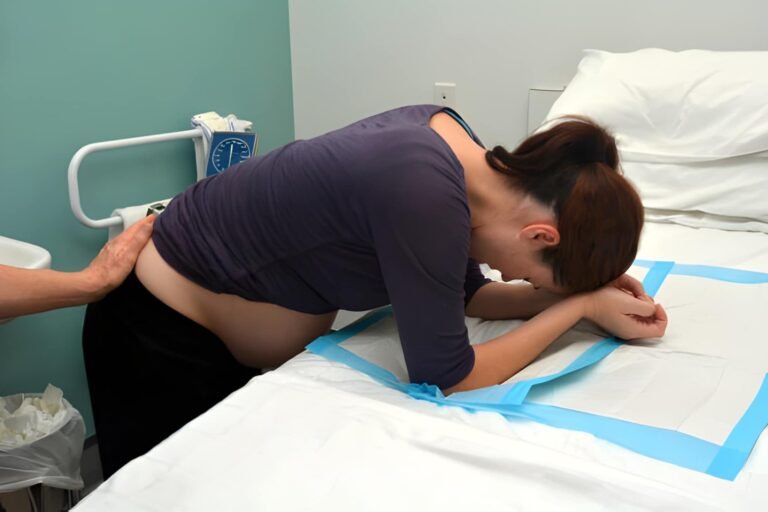
A persistent lower backache is common in early labour, sometimes spreading to the hips or thighs. This may come and go or accompany contractions.
A Bloody ‘Show’
This is a sticky mucus discharge, sometimes streaked with blood. It means the cervix is beginning to open. Labour may begin soon after, though timing varies.
Your Waters Breaking
When the amniotic sac ruptures, you may feel a gush or a slow trickle of warm fluid. Contact your midwife or unit if this happens, even if contractions have not started.
Other Early Labour Symptoms
Some people experience additional changes as labour approaches, such as cramps, pelvic pressure, fatigue, loose stools, nausea, or a burst of energy. These signs alone don’t confirm labour but suggest that the body is preparing.
Understanding the Difference Between True and False Labour
Braxton Hicks contractions are usually irregular and stop when you rest, hydrate, or change position. True labour contractions become stronger, more frequent, and continue regardless of activity. If you’re unsure, seek advice.
What Triggers Labour?
Labour usually begins when hormones from the baby and placenta signal the body to start the birth process. The cervix softens and shortens, contractions become coordinated, and the baby gradually moves into position.
Stages of Labour
Labour is typically divided into three main stages, with a fourth immediately after birth often recognised in clinical settings.
The First Stage of Labour
This stage involves cervical dilation from 0 to 10 centimetres. The early (latent) phase can be slow, with mild irregular contractions and backache. The active phase brings stronger, more frequent contractions and faster cervical change.
Managing the First Stage
Many people cope at home during early labour. Breathing techniques, warm baths, massage, and resting between contractions can help. Some can sleep during early contractions if they are mild and irregular, which may conserve energy for later.
The Second Stage of Labour
Once fully dilated, the pushing stage begins. Contractions become stronger and more productive, helping the baby move down the birth canal until birth.
The Third Stage of Labour
This stage involves delivering the placenta. It usually takes a short time, and your midwife will guide you through it.
The Fourth Stage (Immediate Postnatal Period)
The hours following birth involve monitoring, bonding, and initiating feeding. This stage is important for recovery and newborn checks.
Abnormal Labour
Labour may occasionally progress more slowly or become complicated. Abnormal labour can occur during any stage and may require clinical support to keep both parent and baby safe. Your midwife or team will assess the situation and recommend appropriate care.
When to Contact Your Midwife or Maternity Unit
Call your maternity team if you think labour has started, your waters have broken, or contractions are becoming regular. They will advise whether to stay home or come in for assessment.
Urgent Advice
Contact your maternity unit urgently if there is heavy bleeding, severe abdominal pain, reduced baby movements, or signs of infection.
Immediate Action
Call emergency services if you experience sudden, severe symptoms, heavy bleeding, or feel the baby is coming very quickly.
What Happens at the Hospital?
On arrival, your midwife will assess your contractions, your baby’s wellbeing, and how your labour is progressing. Your stay depends on labour stage, birth recovery, and your baby’s needs.
How to Cope When Labour Begins
Staying calm, hydrated, and mobile helps early labour feel more manageable. Rhythmic breathing, upright positions, warm water, and support from a birth partner can make a significant difference.
Frequently Asked Questions
How long does labour usually last?
Labour duration varies widely. For first births, active labour may last several hours. Subsequent births are often quicker, though every experience differs.
Do all waters break dramatically?
No. Some experience a trickle, while others notice a gush. Both are normal, and you should contact your maternity unit either way.
Can labour start without contractions?
Waters breaking or a bloody show may occur before regular contractions begin. Contractions usually follow within hours.
What if labour doesn’t start after my waters break?
Your maternity team will monitor you closely and discuss options to reduce infection risk if labour doesn’t start on its own.
Is it normal to feel anxious about labour?
Yes. Many people experience worry or uncertainty. Talking with your midwife and preparing a birth plan can help you feel more in control.