How Is Labiaplasty Performed?
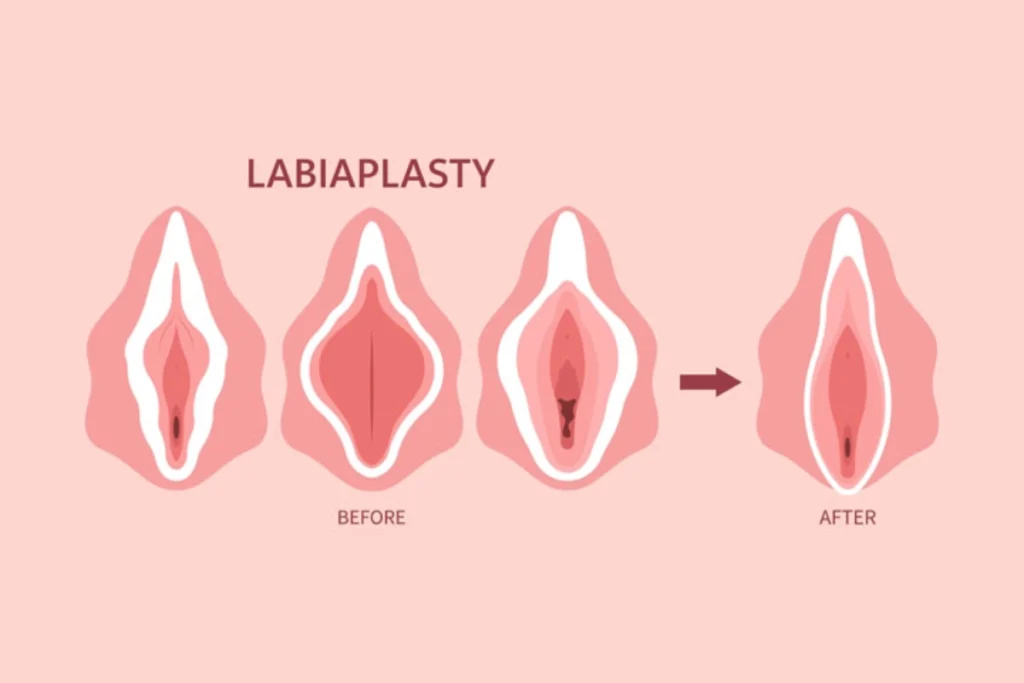
Labiaplasty is performed by surgically removing or reshaping selected labial tissue and closing the incision with fine sutures. The labiaplasty procedure mostly involves the labia minora, the inner folds surrounding the vaginal opening, although other forms of labial surgery exist. In simple terms, labiaplasty surgery is an outpatient procedure that reshapes or reduces the labial folds to improve physical comfort or contour.
Women researching labiaplasty often want to know what happens during the operation and how surgeons choose between trim, wedge or energy-assisted methods. These questions are important because differences in incision location may affect healing, scarring and the resulting contour.
An informed decision begins with an examination and a discussion about what the operation can reasonably address. Labiaplasty is not a treatment for every cause of vulval discomfort, sexual pain or concern about intimate appearance.
Understanding the Anatomy Before Surgery
The labia minora and labia majora are parts of the vulva, which is the external genital anatomy. The labia minora naturally differ in size, colour, texture and symmetry. They may extend beyond the outer folds without indicating a medical problem.
The clitoris, clitoral hood, urethral opening and vaginal entrance are nearby structures with important functions. Surgery must respect sensitive tissue and preserve appropriate coverage. This is why careful anatomical assessment matters more than achieving a standardised appearance.
Patients sometimes use the word vagina when describing the labia. A labiaplasty reshapes the external labial folds; unlike vaginoplasty or vaginal tightening, it does not narrow the internal vaginal canal or treat urinary leakage. Confusing these procedures can create expectations that surgery cannot meet.
Step 1: The Consultation and Clinical Assessment
Before scheduling surgery, the clinician should ask what is troubling the patient—whether the concern stems from childbirth, ageing, or natural anatomy. Repeated friction during sport is a different concern from irritation caused by a skin condition. Both deserve attention, but they may require very different treatment.
A respectful consultation includes permission before any examination, discussion of natural anatomy and enough time to consider alternatives. It should also assess symptoms, medical history, medications, previous genital surgery and any concerns about pressure from another person.
Important Questions Discussed Before Surgery
- Is the concern mainly physical discomfort, appearance or both?
- Are symptoms caused by labial tissue or another treatable condition?
- Has the labial shape changed after childbirth or injury?
- Are the expectations practical and freely chosen?
- Is there a medical condition that may delay safe wound healing?
- What is the expected scar location and risk profile?
If symptoms include persistent itching, unusual discharge, skin thickening or pain unrelated to rubbing, diagnosis should come first. An appropriate examination may identify dermatitis, infection, hormonal changes or another condition not corrected by labiaplasty.
Step 2: Planning the Tissue to Be Reshaped
The surgeon examines each side and discusses the amount and location of the proposed reduction. A naturally asymmetric vulva does not require perfect symmetry, and removing more tissue is not necessarily better. Excessive reduction can increase functional problems.
Surgical markings are used to guide the incision. The clinician should explain where the new edge or scar is expected, whether the natural labial edge will be preserved and whether the proposed change is limited to the labia minora.
The final plan must reflect both the patient’s concerns and what is medically safe. If the desired result would require excessive tissue removal, the surgeon should explain the limitation and consider whether surgery is appropriate at all.
Step 3: Choosing the Anaesthetic
Labiaplasty may be performed using local anaesthesia, local anaesthesia with sedation or general anaesthesia. The choice depends on the extent of surgery, clinical assessment, patient preferences, the facility and the anaesthesia team.
Local anaesthesia numbs the operated area. With sedation, medication may make the patient more relaxed or drowsy. General anaesthesia involves being unconscious. Each approach has benefits, limitations and potential adverse effects that should be discussed beforehand.
Patients may feel pressure or movement under local anaesthesia but should not have sharp operative pain once adequate numbness is established. Tell the team immediately if you experience pain or feel unwell during the procedure.
Step 4: Performing the Trim Technique
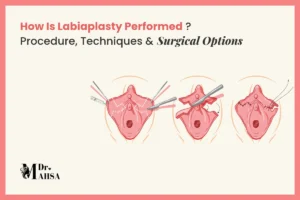
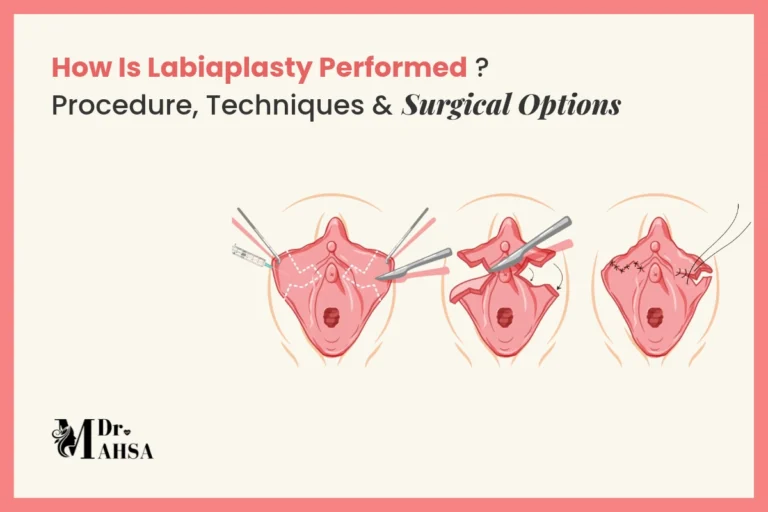
In a trim or edge-reduction labiaplasty, the surgeon removes a selected strip of tissue along the free edge of the labia minora. The remaining edges are then carefully closed. This approach directly changes the length and contour of the outer labial border.
The trim method can be useful in selected anatomical patterns, especially where the border itself is part of the concern. It may also remove some darker or irregular edge tissue if that is included in the planned reduction.
However, the natural edge is changed and the scar runs along the new border. Too much removal may create a tight or uncomfortable contour. The incision pattern alone does not predict whether the result will look natural.
Possible Advantages and Trade-Offs of Trim Reduction
- Allows direct control of how much edge tissue is removed.
- Can address concerns along the visible labial border.
- Places a suture line along the newly shaped edge.
- May alter natural pigmentation and edge texture.
- Requires careful planning to avoid over-reduction or an irregular edge.
Step 5: Performing the Wedge Technique
In a wedge labiaplasty, the surgeon removes a V-shaped or wedge-shaped portion of tissue and brings the remaining edges together. Part of the original natural edge is retained, which may be desirable in certain anatomical patterns.
The technique requires careful management of tissue tension and blood supply. A closure under excessive tension can be vulnerable to separation. Wedge surgery may also create a different distribution of scars compared with a trim procedure.
The Cleveland Clinic explanation of labiaplasty techniques describes both trim and wedge approaches and emphasises choosing the method according to anatomy and surgical goals. Neither method should be described as the safest for every patient.
Possible Advantages and Trade-Offs of Wedge Reduction
- Preserves much of the original free-edge appearance.
- Shortens selected tissue without removing the entire border.
- May not suit every shape or distribution of labial tissue.
- Can involve wound separation if healing or tension is problematic.
- Needs careful discussion about the placement of the incision.
Can a Laser Be Used for Labiaplasty?
Some surgeons perform labiaplasty with laser energy as a cutting instrument instead of, or alongside, conventional surgical tools. This is still a surgical procedure that creates a wound. A laser does not remove the need for anaesthesia, wound protection or appropriate surgical expertise.
Claims that laser labiaplasty is bloodless, scarless, painless or universally faster to heal are not appropriate. Different devices and techniques have different properties, and evidence does not establish one instrument as best for every patient. Similarly, when reviewing CO2 laser labiaplasty before and after images, keep in mind that early postoperative swelling, natural anatomical differences and individual healing patterns mean published photos cannot predict your exact result.
If offered an energy-assisted technique, ask why it is suitable for your anatomy, what risks are specific to the device, and whether conventional alternatives are available. Treatment choice should follow clinical reasoning rather than technology-based marketing.

Are Clitoral Hood Reduction and Other Procedures Included?
Clitoral hood reduction, surgery or volume augmentation on the labia majora (such as fat transfer for labial rejuvenation or labial filler injections), and vaginal procedures are separate treatments with separate indications and risks. They should not automatically be combined with labiaplasty merely because they involve the same general anatomical region.
The clitoral hood protects sensitive clitoral structures. Surgery near the clitoris requires particular attention to sensation, tissue coverage and scar placement. A patient should understand exactly what is being proposed and provide specific informed consent.
Some women may benefit from treatment of an unrelated vulval condition instead of additional surgery. Adding procedures can also increase wound area and affect aftercare, so a larger operation should never be assumed to be a better option.
Step 6: Closing the Incision and Going Home
After reshaping, the surgeon checks bleeding and closes the tissues, commonly using fine absorbable stitches. A dressing or pad may be applied according to the technique and facility’s protocol. The team then monitors the patient after anaesthesia.
Labiaplasty is often planned as a day procedure, but discharge depends on recovery from anaesthesia, bleeding control, comfort and the availability of appropriate support. Transport arrangements may be different after sedation or general anaesthesia.
Mild swelling, bruising, and tenderness are expected during the first few days, and patients are generally advised to wear loose clothing and avoid friction or strenuous activity while incisions heal.
For a detailed week-by-week breakdown of healing stages, wound care, and returning to daily routines, read our complete guide on the labiaplasty recovery timeline.
The surgeon should provide written instructions covering medication, cleaning, activity limits, contact details and follow-up. These instructions are part of treatment, not optional information to look up after going home.
How Long Does the Operation Take?
Procedure time varies depending on the surgical approach, the amount of tissue reshaped, the type of anaesthesia used, and whether any additional medically justified procedures are performed. In most cases, the operation itself typically takes around one to two hours to complete.
The length of time in the facility can be longer than the operation itself. Preparation, anaesthetic administration and observation before discharge should be included when planning your day. Ask your team for an estimate based on the proposed plan.
What Are the Main Benefits, Limitations and Risks?
For a patient with symptoms caused by labial tissue catching or rubbing, reducing that tissue may help selected functional concerns. Some patients seek a particular appearance, but surgery cannot guarantee an exact contour or a specific emotional or sexual outcome.
Risks include bleeding, haematoma, infection, wound breakdown, scarring, altered sensation and pain during intercourse. A small asymmetry can remain. Removing too much tissue may cause ongoing discomfort or dryness, and revision surgery may be required in some circumstances.
Questions Worth Asking Before Choosing a Technique
- Which technique is being recommended, and why?
- Where will the incision and scar be located?
- What normal tissue and sensation must be protected?
- What are the risks of excess removal or wound separation?
- What results are realistic for my particular anatomy?
- Who will manage complications or follow-up concerns?
Does Technique Determine the Final Result?
The incision pattern is one component of the outcome, not the whole story. Healing biology, pre-existing anatomy, tissue quality and surgical judgement also matter. The same technique may be appropriate for one patient and unsuitable for another.
Photos showing an immediate postoperative result do not establish how scars, swelling or comfort will change over time. A thoughtful explanation should include realistic variation rather than a promise of perfect symmetry or an invisible scar.
For women considering labiaplasty in Dubai, Dr. Mahsa Aghaei can discuss the relevant anatomical concerns and explain whether a surgical consultation is appropriate. A final technique recommendation must follow an individual examination and consent process.